Demin from seawater, in a remote region
The steam blow phase required more treated water than the onsite plant — sized only for the station’s daily needs — could produce. The customer needed an average of 1,200 m³ of demineralised water every day, continuously, to keep the steam blow progressing without interruption.
The project site is in a remote part of the country, and the only available feedwater source was an open seawater intake with a salinity of up to 51 mS/cm — demanding significant additional treatment before the RO membranes could even begin to treat it.
Filtration, double-pass RO and regen-in-place polishing
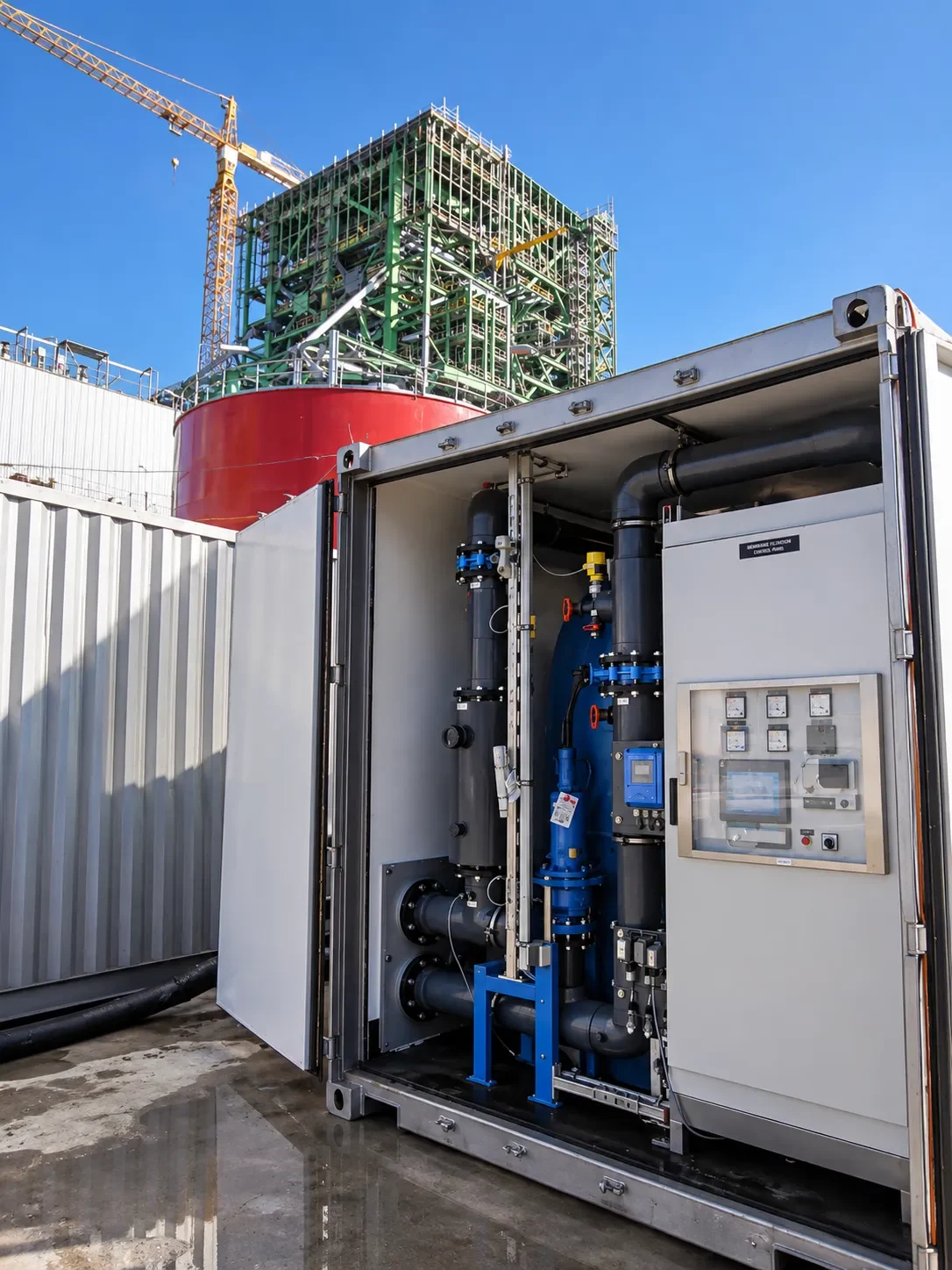
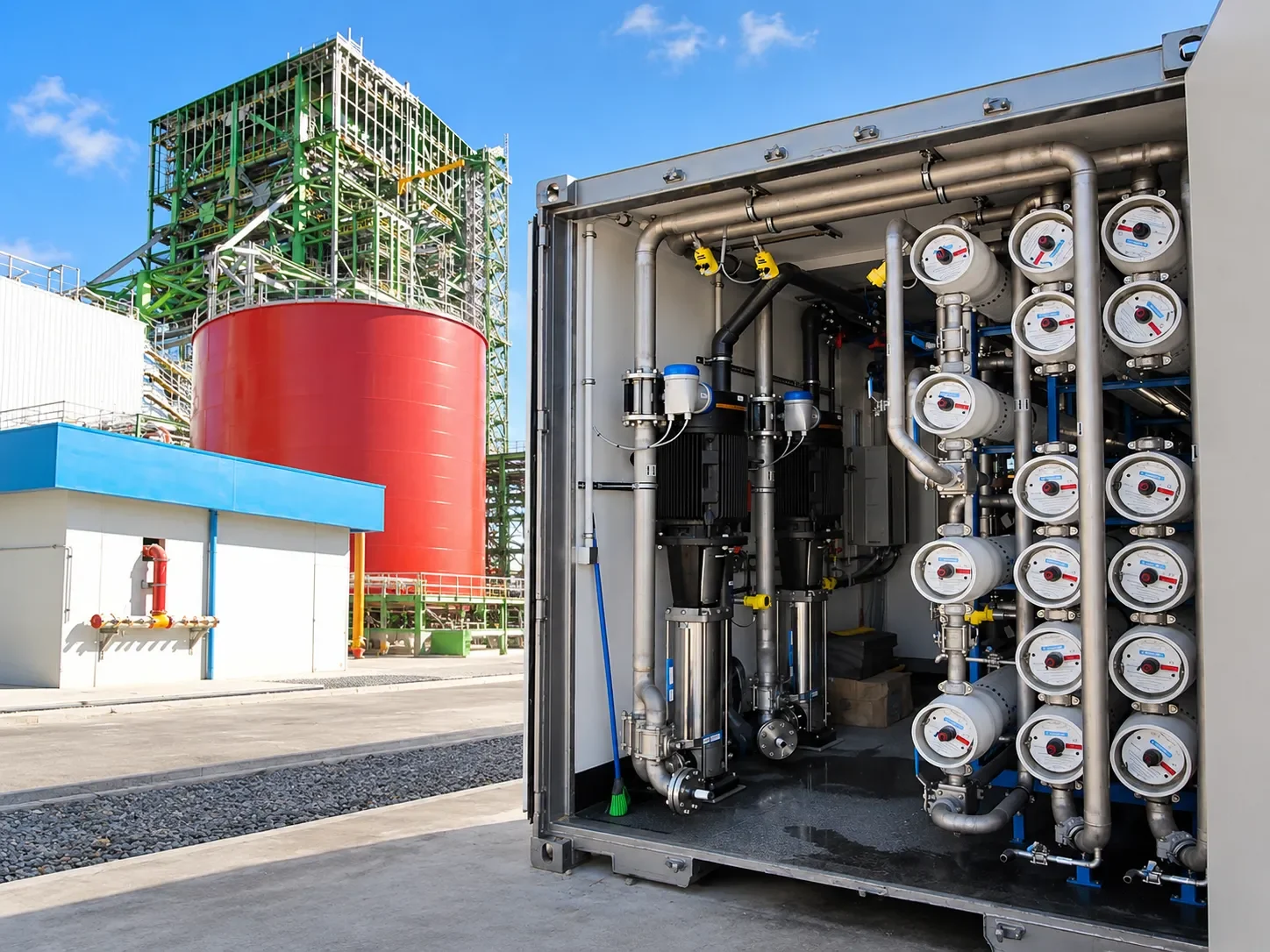
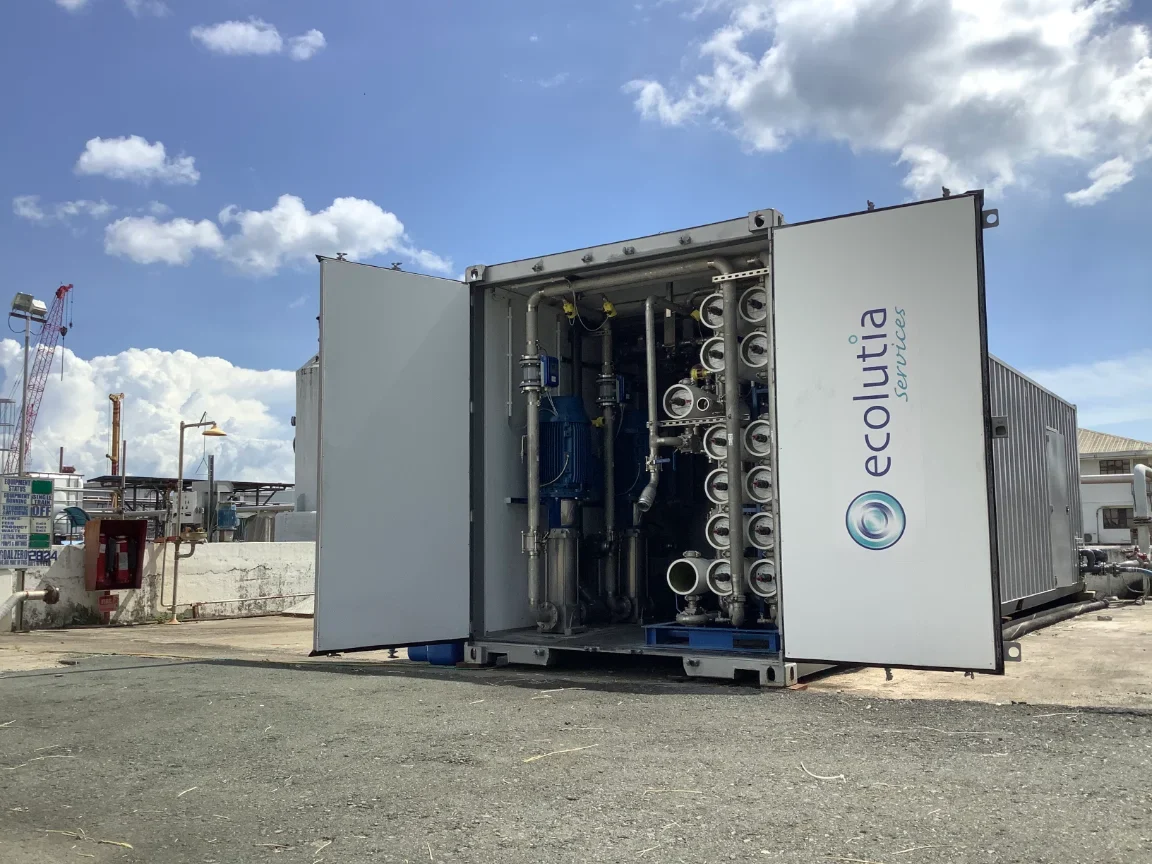
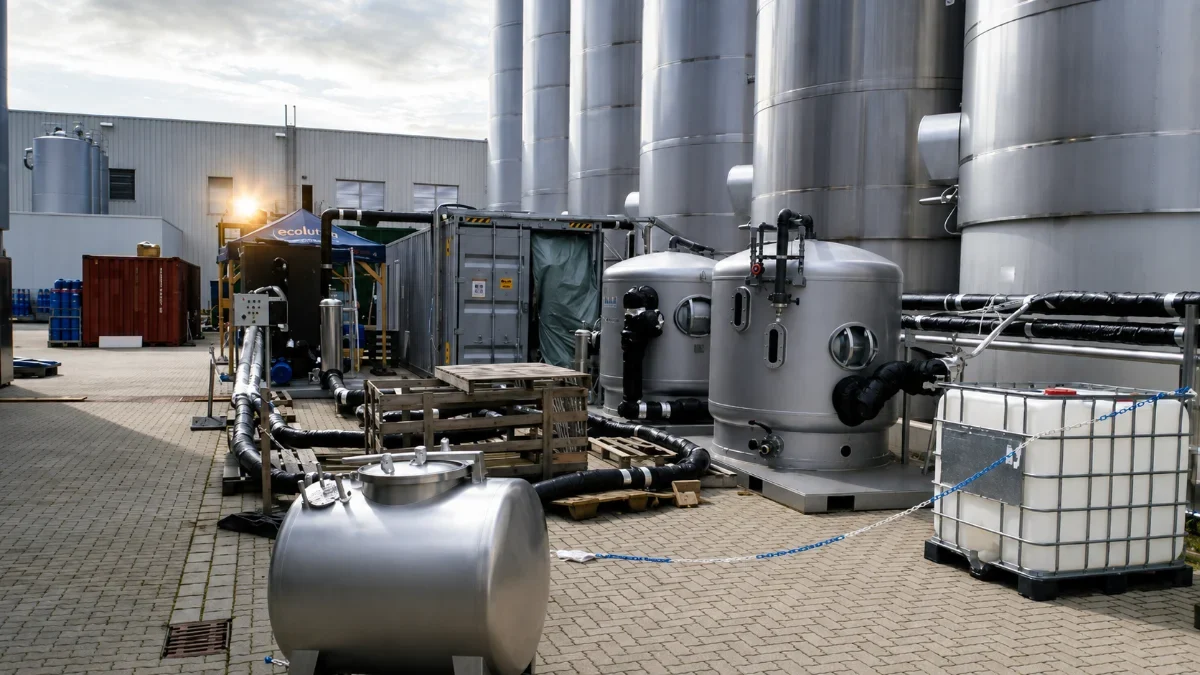
Two Proteus systems provided two-pass multimedia and GAC pre-filtration to <0.5 NTU and <3 SDI at 150 m³/h. A Triton SWRO (40% recovery, 99.4% rejection) and BWRO in series took conductivity from 51 mS/cm to just 5 µS/cm, and a third Proteus setup with duty/standby ion-exchange trains polished to the final demineralised water quality — regenerated in place to avoid shipping resin long distances to a regeneration service facility.
Over 95% availability — with an unexpected extra step
Backwash intervals stretched to five days, keeping availability and water efficiency above 95% and the DI tanks permanently topped up, at under 2.5 kWh/m³ from seawater to demin. When the site’s own ion-exchange plant was not ready, Ecolutia’s engineers quickly reconfigured the fleet to polish evaporator water as well — and the steam blow completed quickly, entirely on Ecolutia water.