High flow, large capacity, and no room for a supply interruption
Production of demineralised water at a flow rate up to 180 m³/h using ion-exchange resin was the only option. Discharging of wastewater was restricted so reverse osmosis was unsuitable, despite its usefulness for remote and large flow projects in commissioning of new CCGT power stations under construction.
A previous supplier was unable to meet the capacity and flow required to ensure each of the power plant commissioning phases would be performed without downtime. If the demin water supply stopped it was likely the whole process would need a restart, costing valuable time and capacity of the ion-exchange resin.
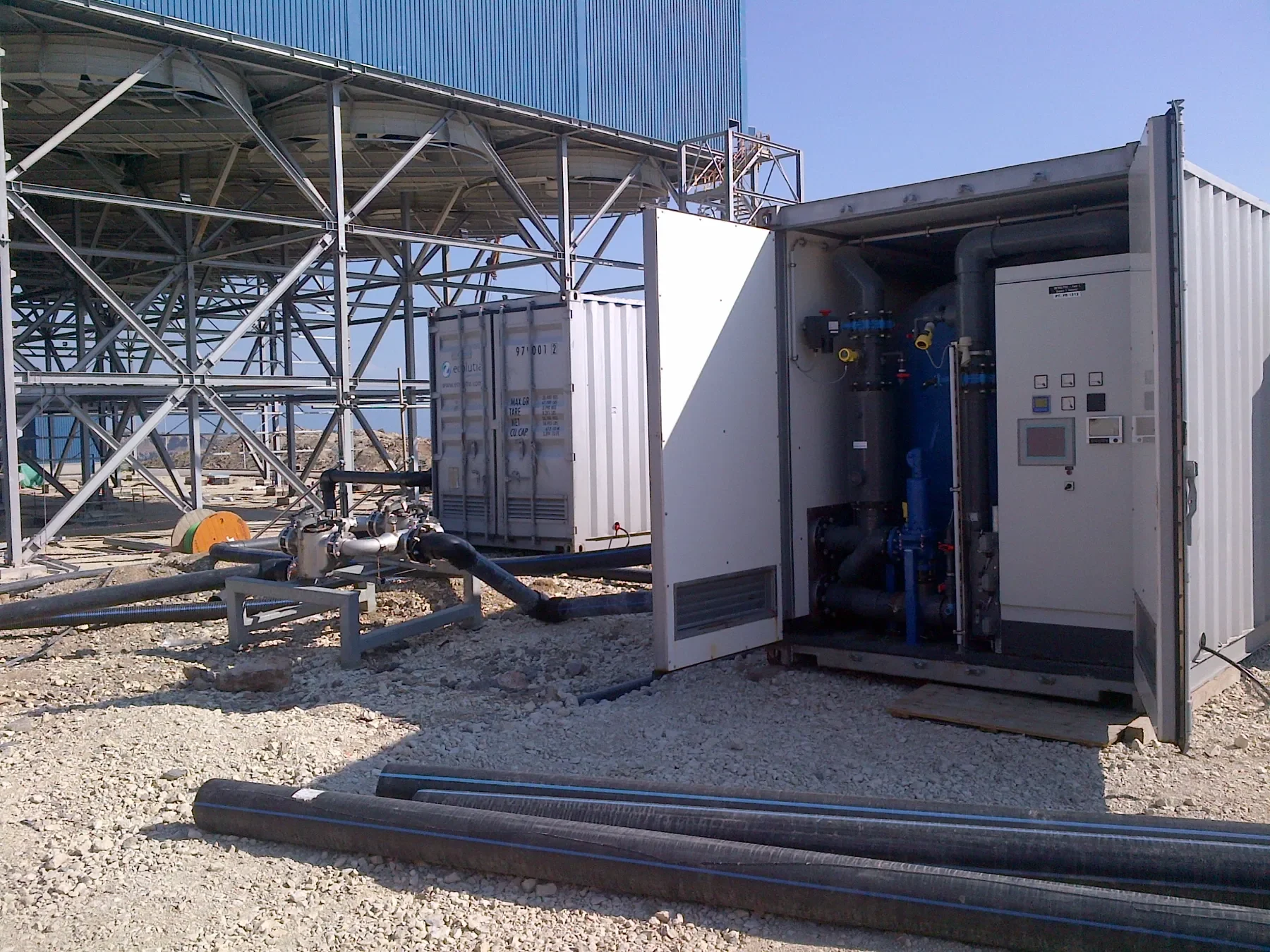
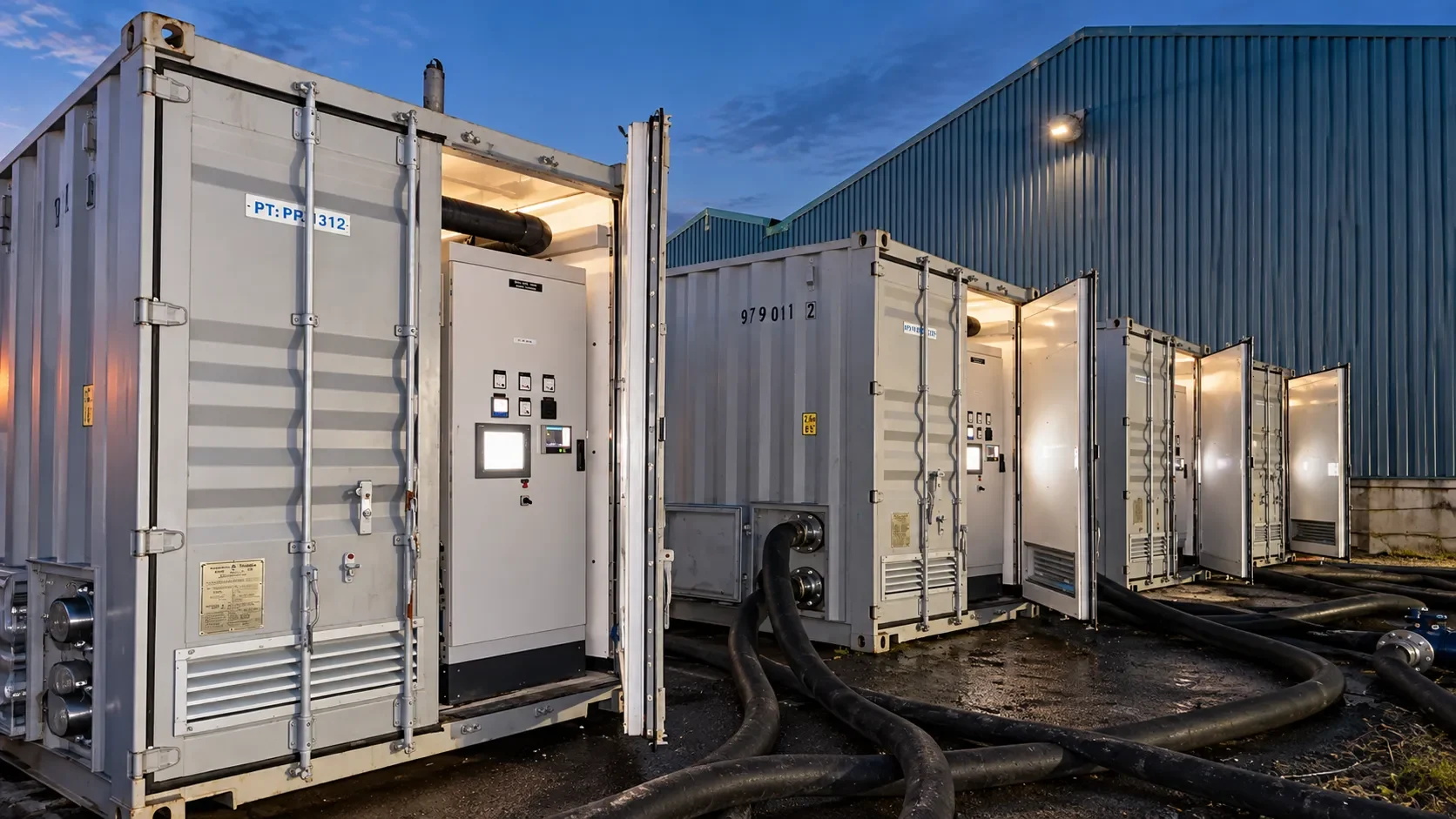
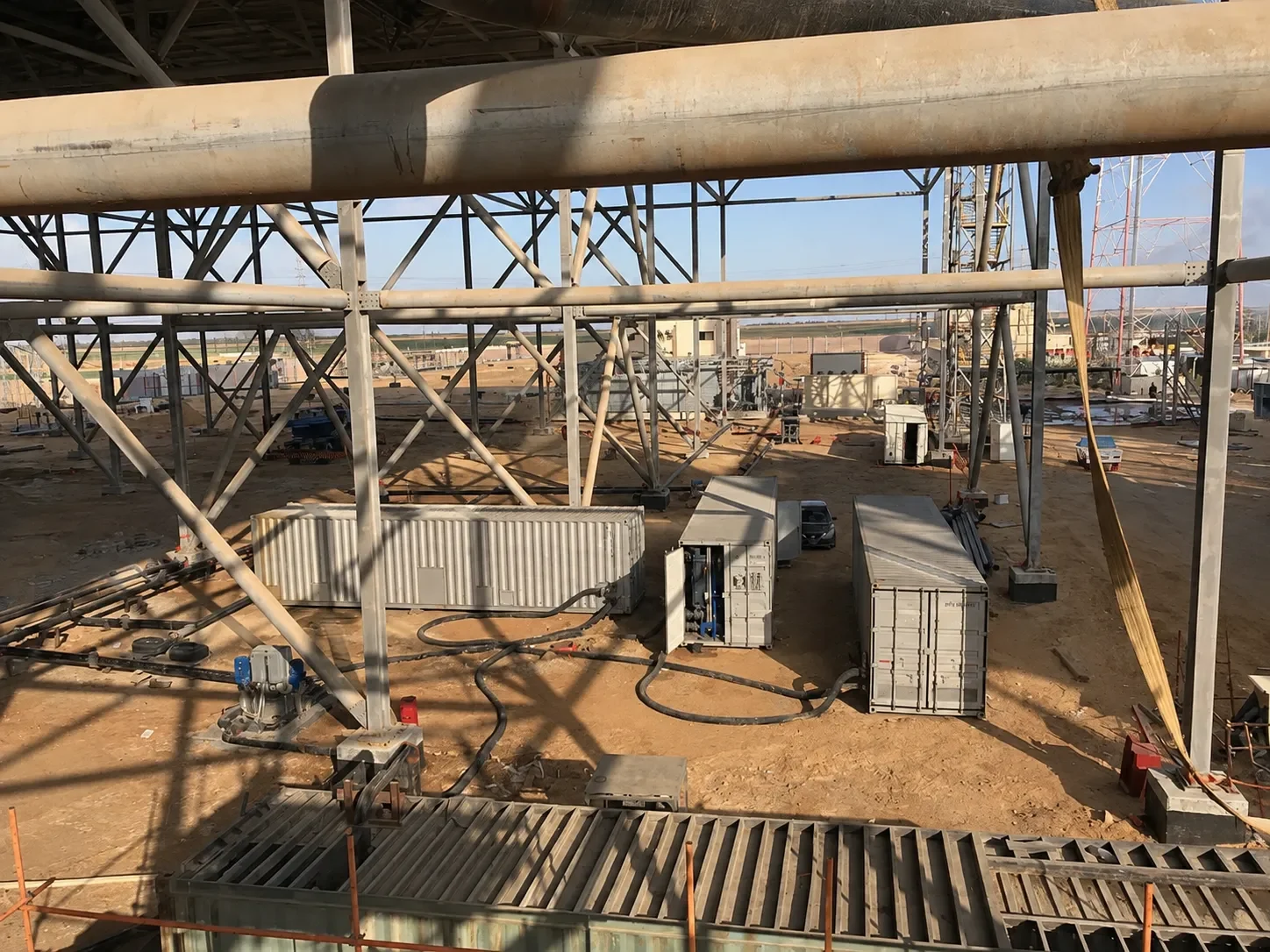
The Ecolutia systems, built within shipping containers for ease of transportation, would also need to be set up and configured on site within 2 days to reclaim some lost days in the construction schedule. As this was a major consideration for the customer a new design and setup procedure was needed for the commissioning to be completed smoothly and efficiently.
Remote location demineralisation in two Proteus systems
With the high flow and high capacity in mind, Ecolutia designed and installed a configuration that would be capable of exceeding the customer’s expectations and provided contingencies in a project location where alternatives are limited.
The project design consisted of a prefiltration unit that would reduce backwashing and therefore reduce wastewater. The design also included an ability to backwash each filter tank separately, while still producing a high flow of demin water, should a need arise.
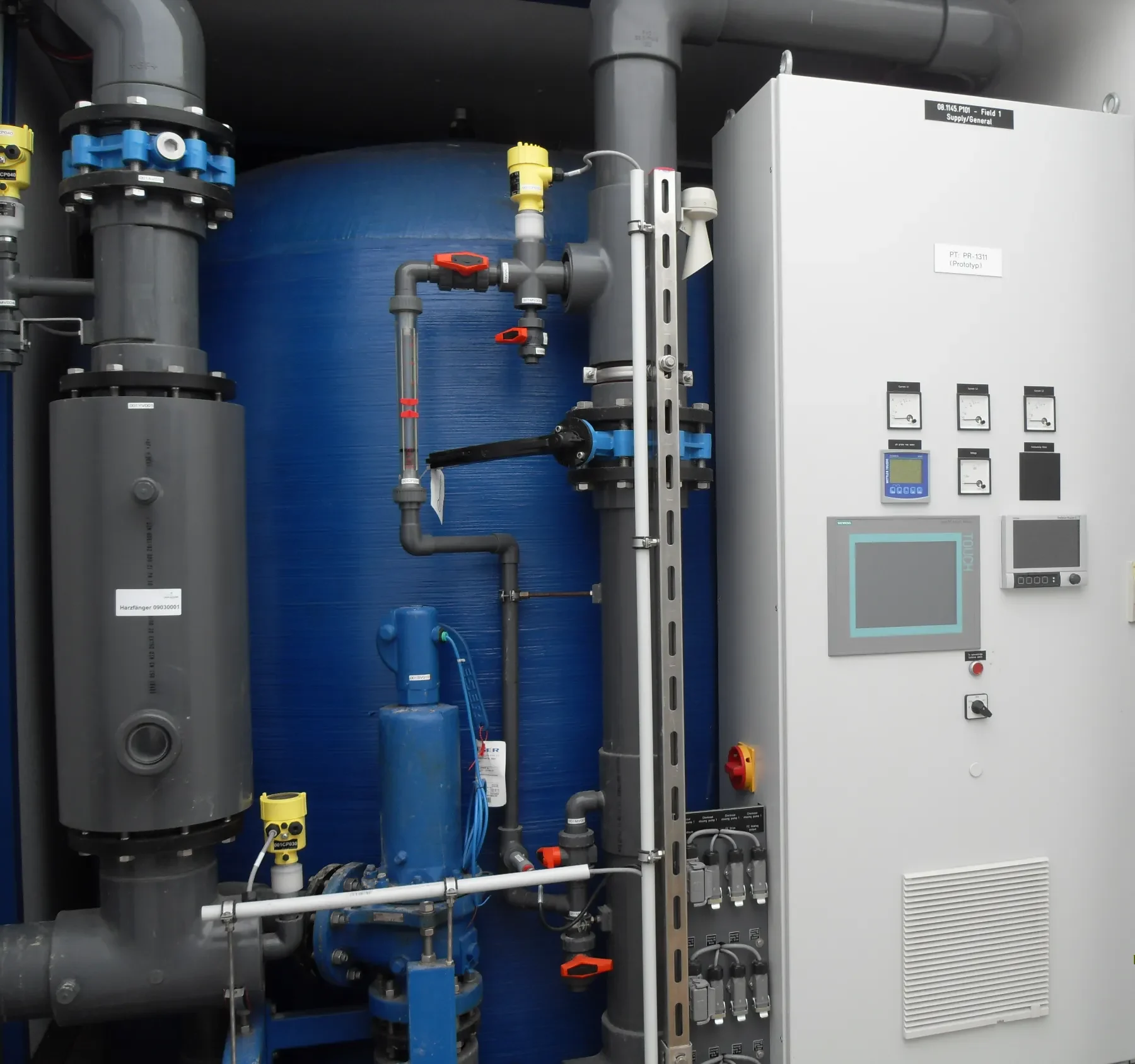
After the filtration, 2 Proteus units, with a specialist combination of ion-exchange resin and tank configuration, produced the demineralised water. This allowed Ecolutia to achieve a higher production capacity using fewer units.
These 2 systems could operate in series or parallel to meet the periods of high flow demand during the commissioning. Due to the flexibility of the configuration Ecolutia was able to isolate certain tanks for additional polishing should it be required. This also allowed for greater certainty in managing the resin capacity.
No backwashes, no downtime, no replacement units
The project design and system configuration proved successful in meeting the phased demands of the project. The large capacity of Ecolutia’s filtration system played a significant role in the project’s success, which meant no backwashes were needed throughout the project.
The consistent and large flow rate allowed the customer to finish commissioning and avoid unnecessary downtime from potential interruptions to the supply of demineralised water at critical times.
The capacity of the ion-exchange resin was more than required and therefore the customer did not have to worry about replacement units and further delays to their commissioning schedule.